
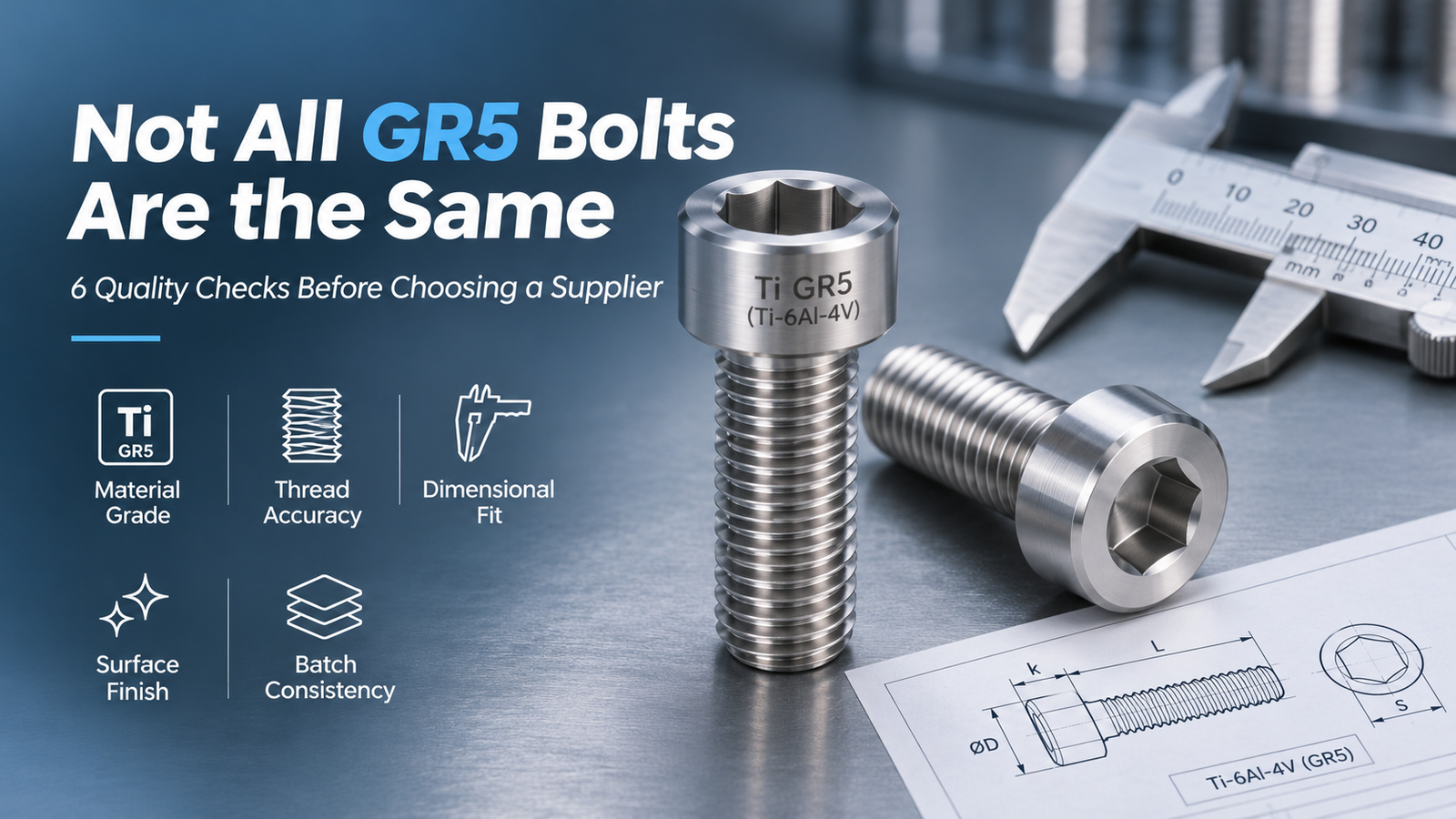
Two gr5 bolts can have the same material grade, size and color, yet perform differently when installed.
For a motorcycle parts retailer, a bicycle workshop or a company developing its own fastening products, the difference may only become apparent during assembly or after the first production batch arrives.
A slightly different thread pitch, an inconsistent anodized finish or an incorrect shoulder length can turn a seemingly straightforward purchase into a series of replacements, customer complaints and unexpected costs.
When sourcing gr5 bolts, comparing material grades and unit prices is only the beginning. The following six quality checks can help buyers make a more informed purchasing decision.
1. Material Grade: A GR5 Label Is Not Enough
Grade 5 titanium, also known as Ti-6Al-4V, is widely used in applications where strength, weight reduction and corrosion resistance are important.
However, a bolt marked as Grade 5 does not automatically provide sufficient evidence of its material quality or finished mechanical properties.
When evaluating a GR5 titanium bolt, buyers should consider:
- Whether material test certificates are available.
- Whether the material composition meets the specified grade.
- Whether the raw material can be traced to the production batch.
- Whether additional mechanical testing is required for the intended application.
Visual appearance, color and weight alone cannot reliably confirm the titanium grade.
For businesses purchasing regularly or developing their own product lines, material documentation and traceability provide a more reliable basis for future orders.
2. Rolled vs. Cut Threads: Manufacturing Makes a Difference
Two GR5 bolts made from the same titanium alloy may have different thread manufacturing processes.
Thread rolling forms the thread through material deformation, while thread cutting removes material to create the required profile.
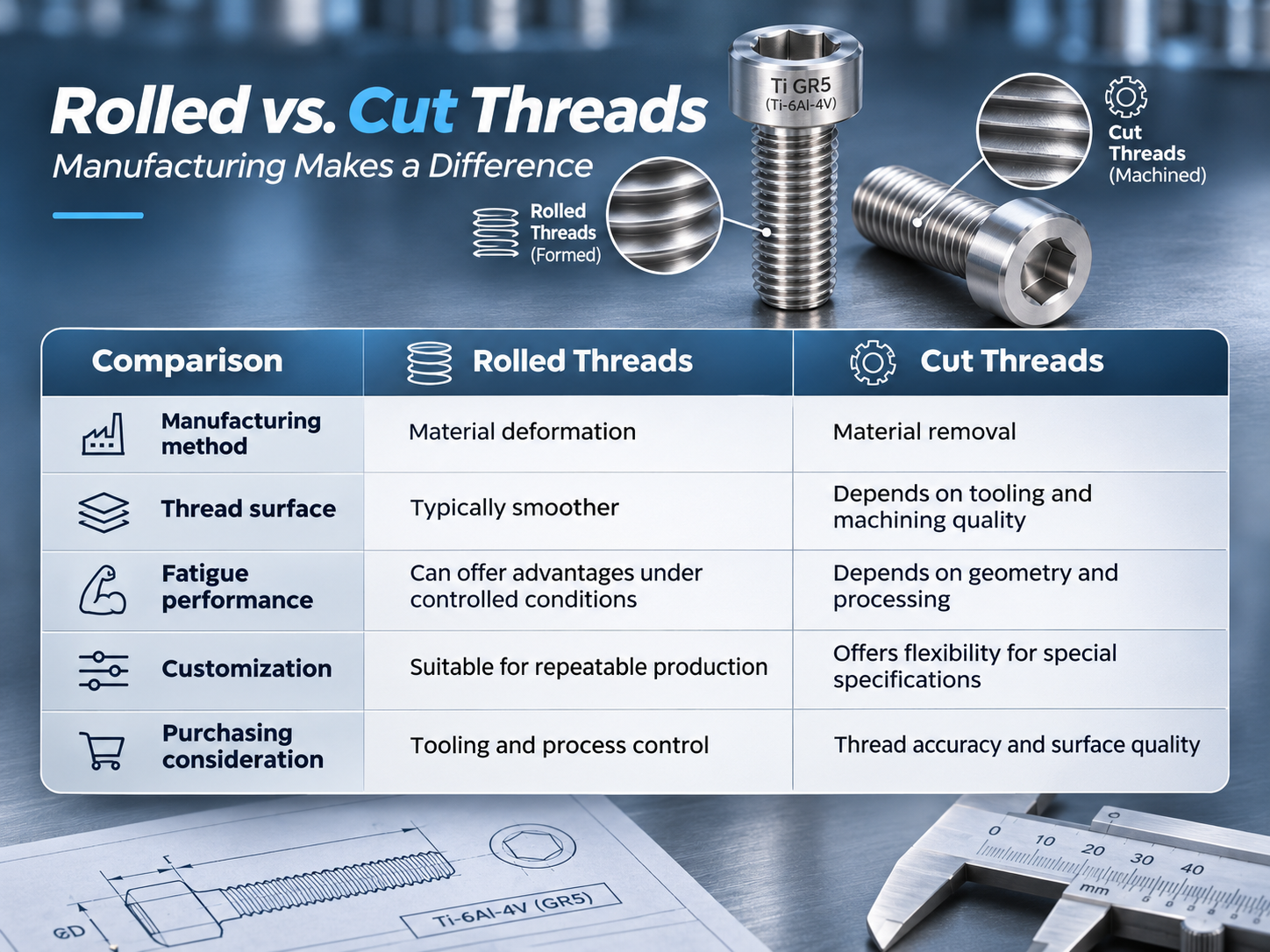
Neither method should be selected solely on price. The appropriate process depends on the bolt geometry, application and required mechanical performance.
When sourcing custom titanium bolts, it is worth confirming the thread manufacturing method and inspection requirements before production begins.
3. Dimensional Accuracy: The Same Size Does Not Always Mean the Same Fit
This is particularly important for motorcycle, automotive and bicycle aftermarket suppliers.
Two bolts may both be described as M6, but differences in their thread pitch, head diameter, shoulder length or seating geometry can affect assembly.
For example, a replacement bolt may have the correct thread diameter but a larger head that does not fit into the original recessed mounting hole.
Before ordering GR5 bolts, confirm the following specifications:
- Thread diameter and pitch.
- Overall and effective thread length.
- Head dimensions and drive type.
- Shoulder diameter and length.
- Seating geometry and dimensional tolerances.
For North American buyers, distinguishing metric threads from UNC and UNF threads is especially important when sourcing replacement parts.
When standard sizes cannot meet the assembly requirements, manufacturing custom titanium bolts based on drawings or physical samples can be a more practical option.
For safety-critical applications, titanium replacements must also meet the relevant engineering and original equipment requirements. Material grade alone does not establish suitability.
4. Surface Finish: Keeping Colors Consistent Across Different Orders
For motorcycle and bicycle accessory brands, the appearance of titanium fasteners is often part of the product’s selling point.
However, anodized titanium colors can vary depending on surface preparation, oxide film thickness and processing conditions.
A blue bolt from the first order may not look exactly the same as one supplied several months later.
This becomes particularly noticeable when multiple bolt sizes are sold together as a matching kit.
Before approving colored GR5 bolts, buyers should confirm:
- The required finish, such as anodizing, polishing or PVD.
- An approved physical color reference.
- Acceptable shade variation between different sizes and batches.
- Surface appearance requirements, including scratches and machining marks.
For customized product ranges, establishing an agreed color and finish standard during sampling can reduce uncertainty when placing repeat orders.
5. Sample Quality vs. Mass Production: Consistency Matters More Than One Good Sample
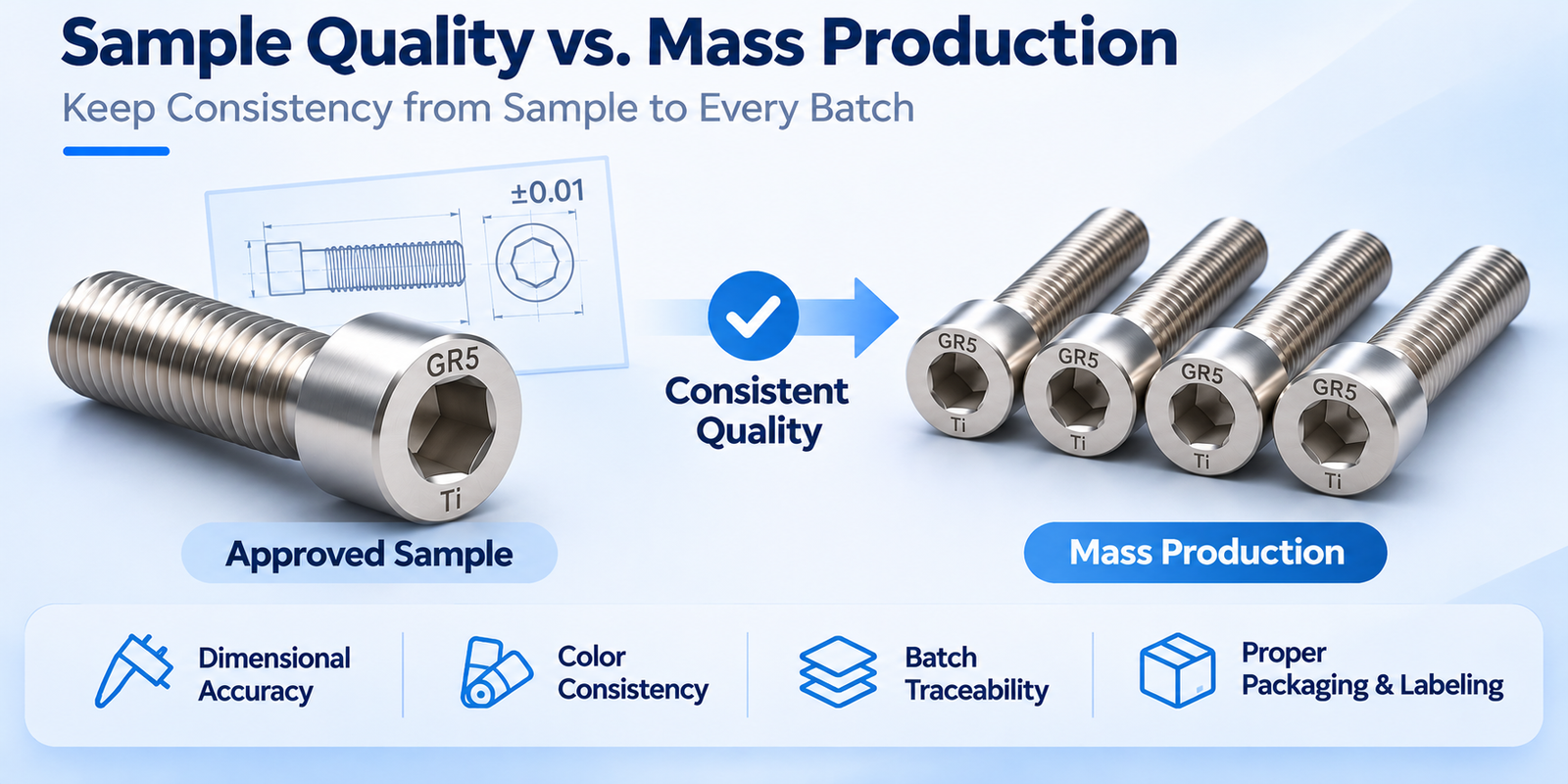
A well-made sample is important, but it does not tell the buyer everything about future production batches.
Imagine ordering several hundred custom titanium bolts in different lengths and colors. The approved samples fit perfectly, but part of the production batch arrives with inconsistent thread lengths or visible color differences.
The cost is no longer limited to the bolts themselves. It may include additional inspection, sorting, replacements and delayed customer deliveries.
Before confirming mass production, buyers should agree with the manufacturer on:
- Approved drawings and dimensional tolerances.
- Thread inspection and fitment requirements.
- Surface finish and color acceptance criteria.
- Inspection records and batch identification.
- Packaging and labeling for different specifications.
These requirements should remain available for subsequent orders.
A good supplier should be able to explain how the approved sample will be used as a reference for batch production, rather than treating sample approval as the end of the quality discussion.
6. Choosing a Supplier That Can Support Both Standard and Custom Orders
For small and medium-sized aftermarket brands, purchasing titanium fasteners often involves more than ordering one standard product.
A single project may require several standard bolt sizes, a few special-length fasteners and customized finishes. Ordering each item separately can increase communication, inventory and purchasing complexity.
When selecting a supplier of GR5 bolts, consider whether they can support both existing products and future development requirements.
At RFL Tech, our own manufacturing facility combines CNC precision machining, thread processing and surface finishing services for standard and custom titanium bolts.
With more than 10 years of manufacturing experience, 36 CNC machines and eight stages of quality checks, we work with customers on requirements including:
- Standard titanium bolts, screws, nuts and washers.
- Custom lengths, head styles and thread specifications.
- Metric, UNC and UNF threads.
- Customized colors and surface finishes.
- Orders combining multiple specifications, subject to agreed quantities.
- Manufacturing based on drawings or physical samples.
For buyers developing new products or expanding an existing range, discussing the specifications, inspection requirements and expected order quantities at an early stage can make supplier evaluation much easier.
Conclusion
The real value of GR5 bolts is not determined by the material grade or purchase price alone.
Material verification, thread quality, dimensional accuracy, surface finishing and production consistency all contribute to the reliability of the finished product.
If you are planning a new titanium fastener range or looking for custom titanium bolts that are difficult to source in standard sizes, start with the application, specifications and expected quantities.
Even an existing sample or a preliminary drawing can provide a useful starting point for discussing the manufacturing options.
The right supplier should help you achieve the same expected quality beyond the first order.


